

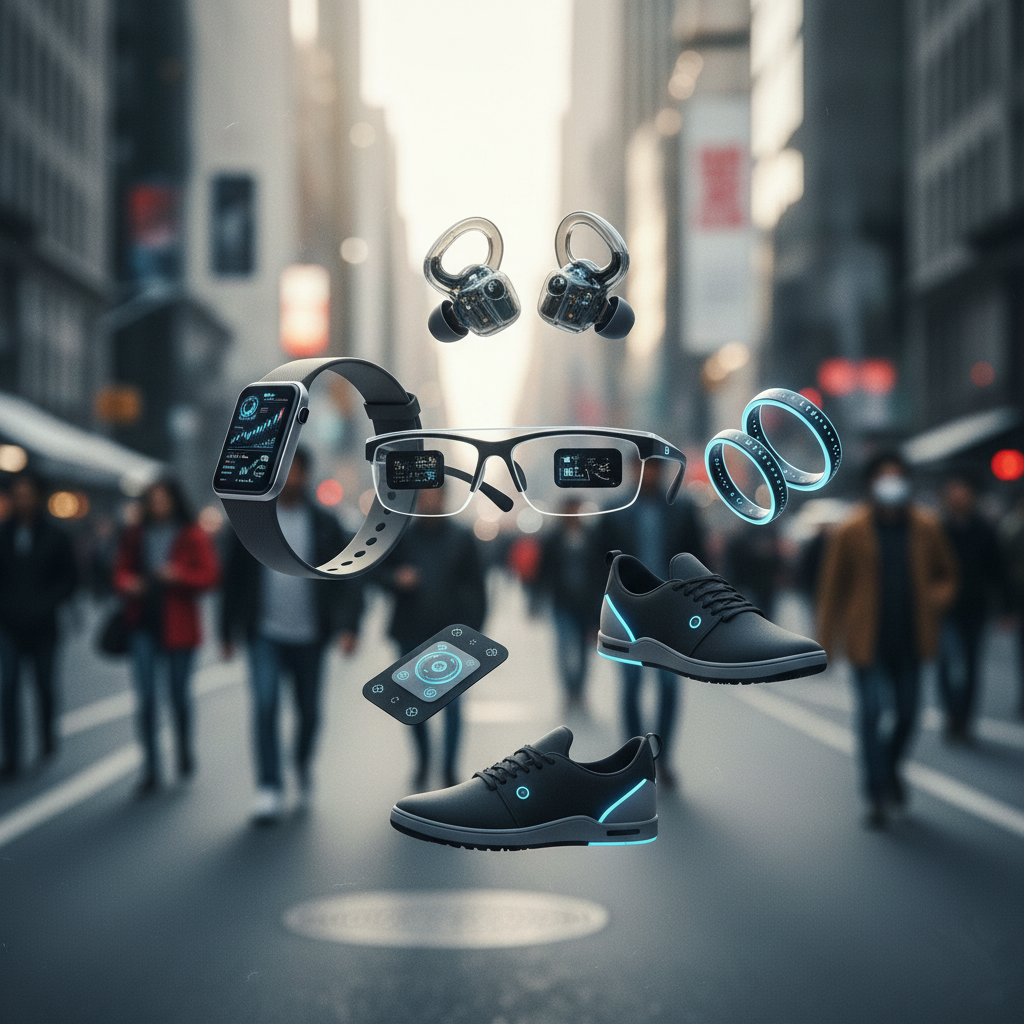
Wearable AI is quietly positioning itself as the post-smartphone platform.
For seventeen years, the smartphone has been the main way people interact with technology. By 2025, a new type of device will start to challenge its dominance. These AI wearables will lessen the need to tap, swipe, or hold a screen at all. This change is not just a theory. It’s already evident in product launches, hardware plans, and market data.
A Real Market Turning Point
According to Canalys (2024), global smartphone shipments have reached their lowest level in ten years, dropping below 1.14 billion units. Meanwhile, the wearables category, especially “smart audio,” rings, and pins, is growing faster than any other type of consumer device.
• Apple’s AirPods now outsell the Apple Watch and iPad combined, according to Counterpoint Research.
• Samsung, Oura, and Ultrahuman are driving double-digit growth in smart rings with biometric + AI insights.
• Meta’s Ray-Ban Smart Glasses (2024) saw demand far exceed forecasts, becoming the company’s fastest-selling hardware since Quest.
• Humane AI Pin, despite mixed reviews, opened the door for screenless AI-first devices.
This isn’t a “gadget trend.” It’s the beginning of an interface migration.
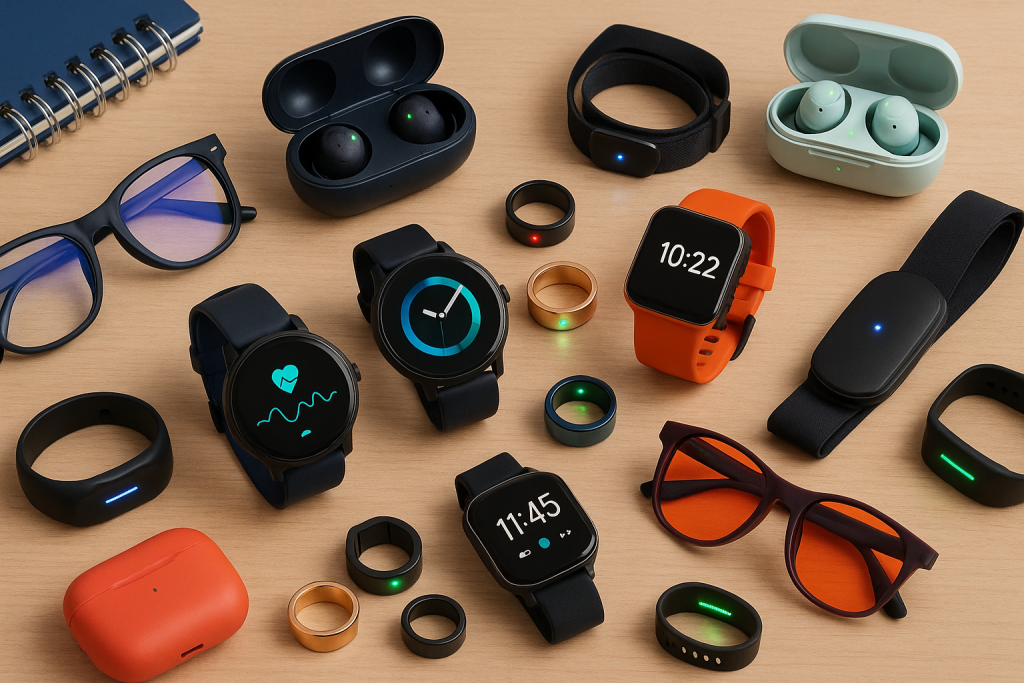
Why Wearables Fit the AI Era
Traditional phones were designed for apps, icons, and small interactions. In contrast, AI interfaces depend on surrounding context, real-time sensing, and natural input like voice, vision, and biometrics. Wearables, especially rings, glasses, earbuds, and pins, are physically closer to the user.
That proximity unlocks:
- continuous biometric signals (heart rate variability, stress patterns, glucose proxies)
- always-available microphones and cameras
- real-time motion and environment sensing
- instant contextual queries (“what am I looking at?”)
Smartphones simply cannot match the sensor density, proximity, or latency required for AI-driven computing.
This aligns with Apple, Google, and Meta’s hardware directions: on-device AI, low-latency inference chips, and ambient intelligence frameworks (Apple’s Neural Engine, Google Tensor G3, Meta’s on-glasses multimodal models).
AI doesn’t need a screen — it needs context. And wearables own the context layer.
The Tech Behind the Shift
1. On-Device AI Chips Are Getting Extremely Small
Qualcomm’s Snapdragon W5+ Gen 1 and Apple’s custom wearables silicon now support on-device inference — meaning AI tasks run locally, not in the cloud.
This is why Oura, Ultrahuman, and Whoop can now deliver predictive recovery and stress analytics in near real time.
2. Cloud-to-Edge Movement Is Accelerating
Google’s Gemini Nano and Meta’s on-glasses LLMs prove that AI models are shrinking fast enough to live inside lightweight hardware.
3. The Voice + Vision Interface Is Finally Good Enough
Meta’s Ray-Ban glasses (2024–2025) integrate a multimodal AI assistant that can recognize objects, translate text, and summarize scenes — without opening a phone.
This marks a clear break from the “phone-first” paradigm.
It Doesn’t Kill the Phone — but It Moves It Down the Stack
The smartphone won’t vanish any time soon. However, it is losing its role as the main interface.
The center of gravity is shifting to:
- your wrist (health + notifications + AI summaries)
- your ears (AI assistants, ambient computing)
- your glasses (vision-based interaction)
- your ring (biometrics + identity)
- your lapel (voice and contextual computation)
The phone increasingly becomes the hub, not the interface.