

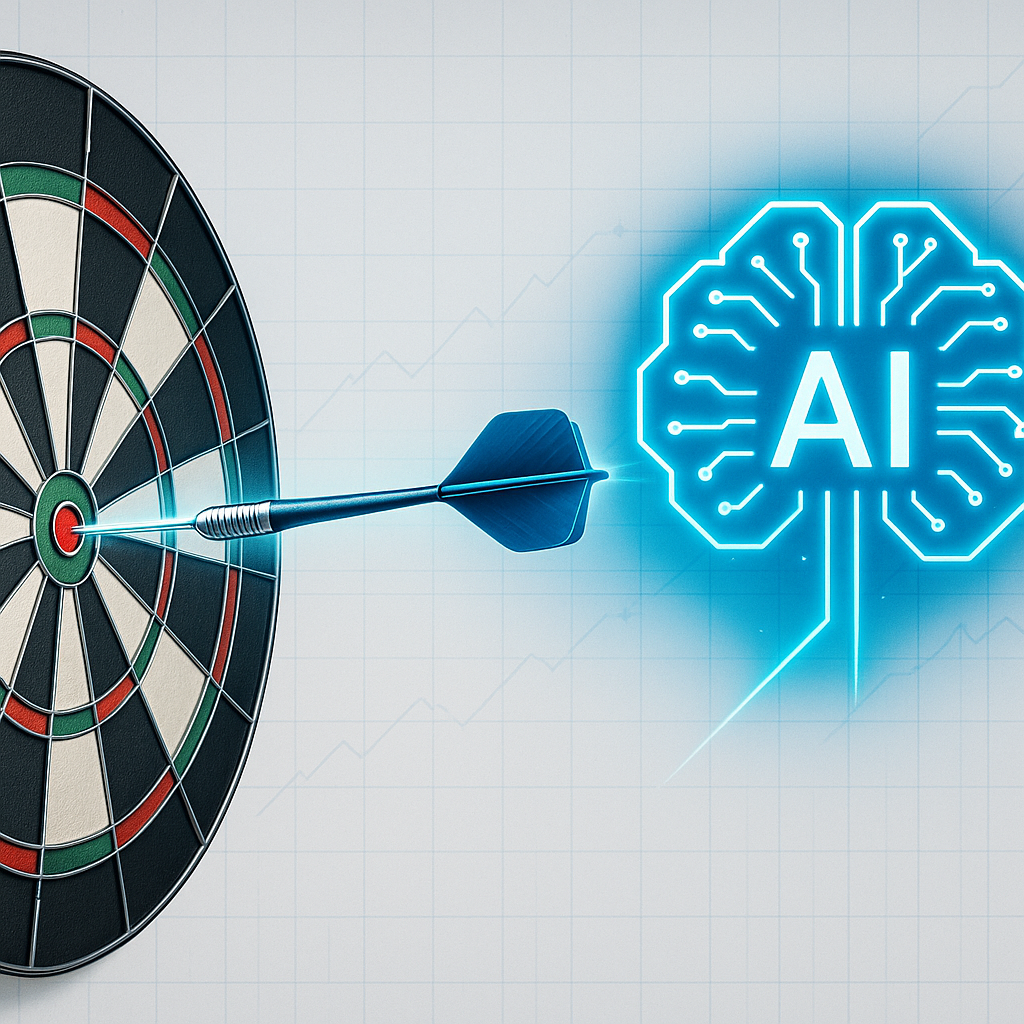
From Intuition to Intelligence: How AI Is Redefining Decision-Making Power
For most of modern history, industries ran on something we politely called experience — and less politely called educated guessing. A seasoned doctor “just knew.” A portfolio manager “had a sense.” An operations lead “could feel a bottleneck coming.”
We have always trusted instinct because there was nothing better.
That era is fading — quietly, then all at once.
Today, industries aren’t simply adding AI as a tool. They’re rebuilding decision-making from the ground up, replacing instinctive judgment with machine-measured probability. Not because humans did not become better… but because precision finally caught up.
And once you see what precision looks like and what you can achieve with it, guessing starts to feel irresponsible, even reckless.
The Hidden Cost of Intuition
People don’t tend to agree to this, but intuition has always carried a tax:
Bad reads. Bias. Overconfidence. Blind spots.
Even the most experienced professionals have them.
For decades, that was unavoidable.
Now? It’s optional.
A hospital system can detect patterns in lab data days before a physician would notice symptoms.
A supply chain algorithm can predict where a shipment will bottleneck before a human sees a delay.
Retail pricing engines adjust thousands of SKUs in real-time based on micro-shifts in demand, weather, and sentiment — no merchandiser can keep up with that.
We’ve entered the “don’t guess if you don’t have to” economy.
And the moment a process becomes quantifiable, it becomes an area that can be improved.
Instinct becomes a liability when precision is available.

What Changes Now
This doesn’t mean humans are out — far from it.
It means our role is changing.
Instead of:
“What should we do?”
the key question becomes:
“Which model output do we trust, and why?”
That requires clarity, not clairvoyance.
Judgment, not gut instinct.
The best decision-makers won’t be the ones who “feel” the answer — they’ll be the ones who challenge the system intelligently, ask sharper questions, weigh trade-offs, and know when a model is overconfident.
In other words, the power shifts from predicting the future…
to understanding the probability of it.
That’s a very different skill.
“Decision-making isn’t losing its human heart.
It’s gaining a second mind.”
The Future Expert
The next wave of leaders won’t be the loudest voice in the room, or the person with the most experience. They’ll be the ones who can sit with data, absorb it, and say:
Here’s what’s likely. Here’s what matters. Here’s the risk we’re accepting.
No mystique. No “trust me.”
Just clarity.
And clarity scales.
The industries that thrive won’t just automate tasks —
they’ll automate uncertainty, leaving humans to do what only we can do:
Set direction.
Choose values.
Interpret context.
Lead through ambiguity.
Precision is taking the wheel.
Humans still choose the destination.
Guessing wasn’t magic — it was a placeholder.
Now we have something reliably better.
And in a world where everyone has access to intelligence on demand, the advantage won’t go to the best guesser —
but the best decider.